Don’t Die Today

I wanted to make a zine since my days in DR Congo, to show my father the moments between the final images. I never started—and he died before I could share those stories. Nearly 20 years later, with support from Dmitry and Arc, I’m finally doing it. This first issue is about controlling fear on Ukraine’s drone-infected frontline.
The backstory
Kostyantynivka, Donbas again—it's a city I've entered so many times I’ve lost count. Usually, I’m just passing through, maybe stopping for a few pictures. But October 3rd, 2025, was different.
Issue 1
I’m driving with Volker Papst, NZZ journalist, on my right, both of us in body armor and helmets, two cameras with me. I keep the door slightly open in case the press officer spots a drone. If one comes in, we brake hard and jump out in opposite directions, away from the vehicle.

This map shows the Russian advances around Kramatorsk and Kostyantynivka, where we worked. The town is almost encircled with only one main road in and out, so we used side roads. The FPV drone range reaches Kramatorsk and easily covers Kostyantynivka from all directions.
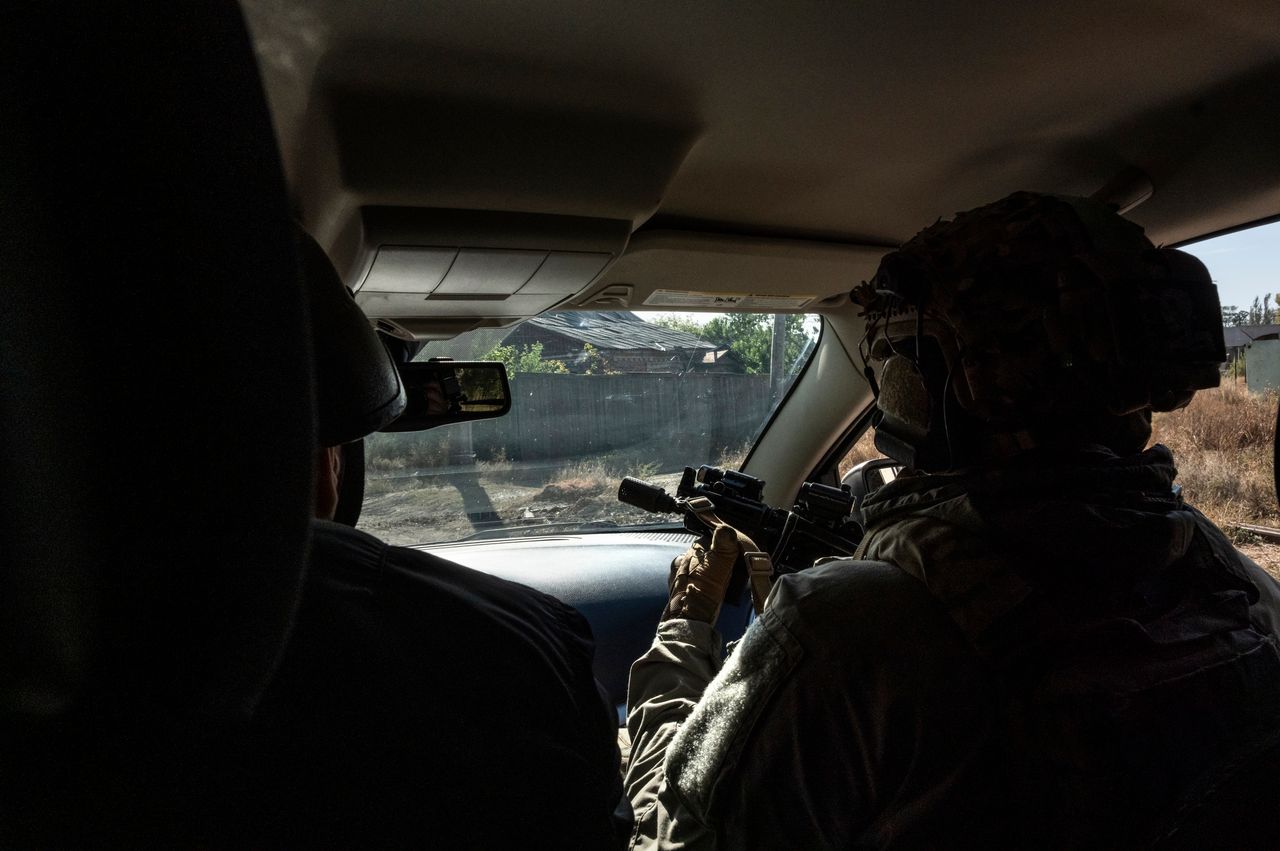
The soldier uses a special weapon that fires like a shotgun to hit drones coming toward us. He is basically ready for anything, which is pretty unnerving. This is right before we get out of the vehicle and start walking into the city.
We walk or run into the city, separated so one hit does not take all of us. With no cover you just look for anything. Bushes actually help, the leaves can mask you. You push yourself deep inside so if a drone detonates it hits the foliage first, not your body.
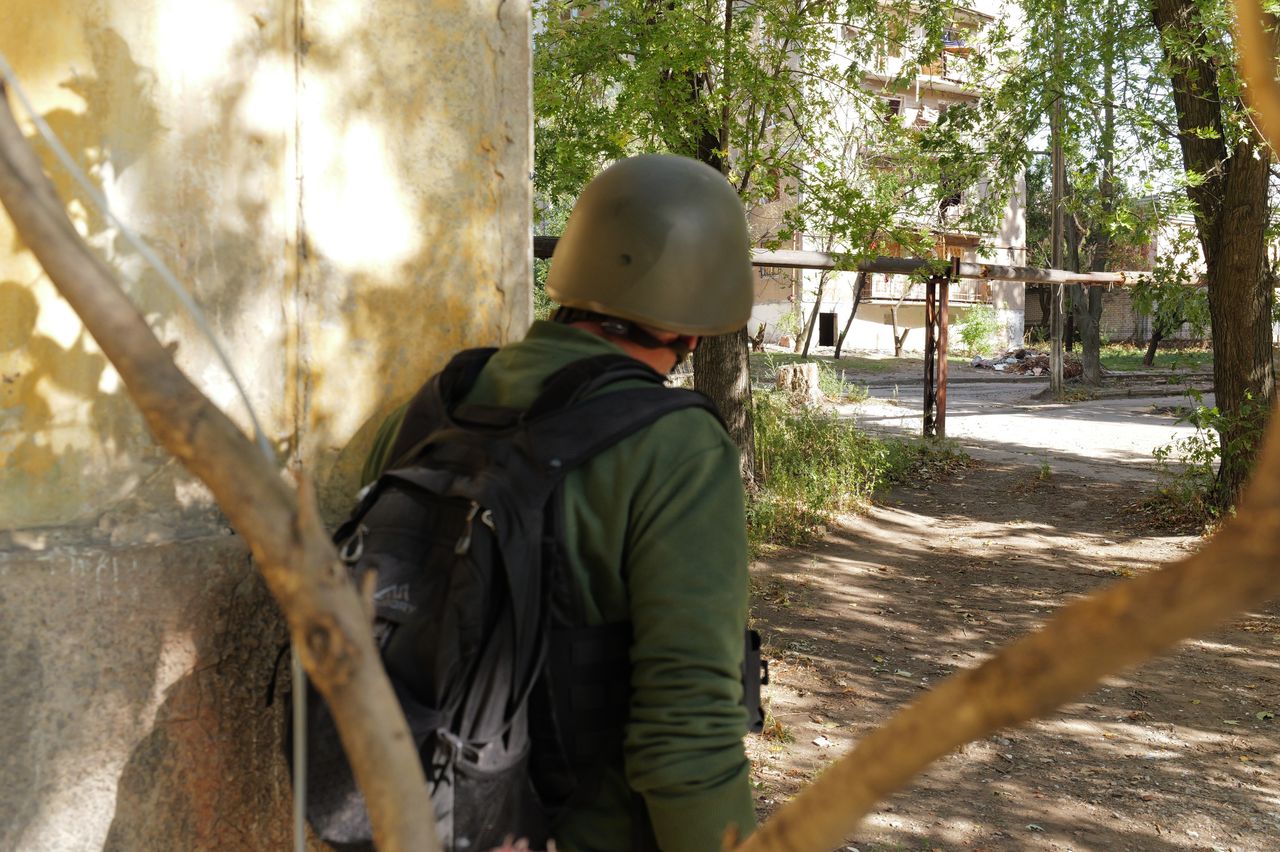
I am behind Volker, using a building as cover, even if drones can move around it. We wait for the military spokesperson on the other side to give us the go to continue walking. We are basically using the wall as a visual shield from whatever might be above us.
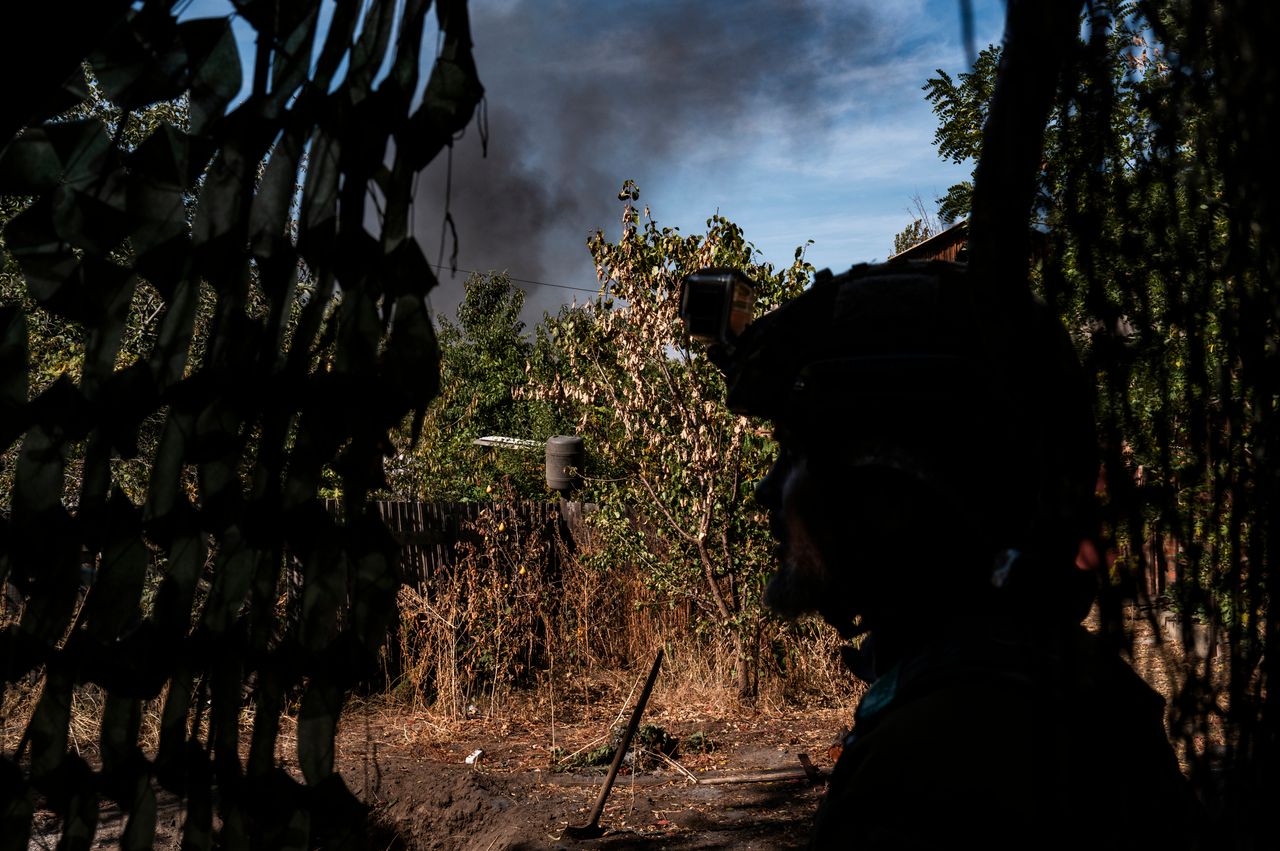
We have to be sure we do not give up the position of camps, so this was tricky. I used the netting to cover as much as possible while showing the soldier silhouetted and the police station burning in the distance. A bit of a visual trick to hide where we actually are.
Subscribe to Dominic Nahr
This content is available to paid subscribers.
Comments
No comments yet. Be the first to share your thoughts!


It's not only about controlling fear but also about how to survive in such a hostile environment. No time to relax ... I have not seen such a reportage where the reader is actually transplanted onto the scene thanks to impressive footage and photography. The expression of the soldier in the bunker says it all : total exhaustion.
The photograph of the soldier illuminating the shells with red light is awesome.
The high speed drive through the netted death road is highly impressive and anxiogenic.
Technical question:
- I am given to understand that at the end of the day, you must be spending quite some time cleaning your gear because of the dust and various projections.
Do you also wipe the sensor ? - In the first video, are you using 2 Leica SL with a protective UV filter attached to the lens ?
- In these war scenes, which lenses are your favorite ?
You are wearing a Tour Eiffel icon, kindly elaborate.
Hello Dominic,
I've finally made it here. First of all, a huge thank you for this community and these insights!
This story immediately captivated me! This kind of reporting and behind-the-scenes look is exactly what I've been looking for for a very, very long time. The combination of video sequences makes it feel even more immersive.
Your storytelling here makes us, as readers, feel like we're right there with you, figuratively speaking.
The constant danger, the constant heightened senses—it's pretty intense stuff—my heart races when I read it.
I've admired your work for a long time (and we've often been in contact via Instagram before).
But this tops everything.
It's frightening to see the extent to which this new type of warfare with the massive use of drones has reached today. All the more respect for you for venturing into this territory.
The blank stare of the soldier, which you've seen in so many others, speaks volumes.
The image of the soldier in the dust (his back to you) with the light breaking through the space in rays is extremely good.
What I'd also be interested in, perhaps in a separate story, is whether you usually make "one-day trips" to the front lines, etc., and how you're supplied. How much water and food do you carry? Are there perhaps also trips where you can't return and are entirely self-sufficient in terms of supplies, etc.?
Please always stay safe.